


When The Block reported that Cardano founder Charles Hoskinson had unveiled Midnight as a privacy preserving partner chain, the headline was about the chain’s cryptography. But a live privacy network must solve a more operational question. If transaction outputs are shielded, how does a wallet discover which encrypted data belongs to its user, obtain the witness needed to spend it, learn which notes have been nullified, and keep current through reorganizations without handing an indexer a running log of its financial life?
Midnight’s official launch announcement says the network went live on March 29, 2026, establishing permanent state continuity and beginning production activity. That changes the character of the question. Shielded-state discovery is no longer a design abstraction. It is a reliability, privacy and infrastructure problem that wallets, service providers and users have to operate under adversarial conditions.
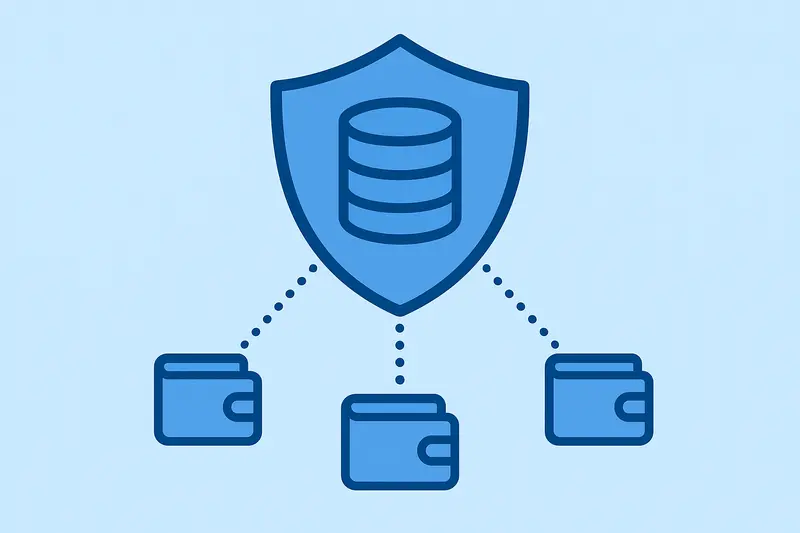
The central distinction is easy to miss. Encryption can protect the contents of a note. It does not automatically protect the act of asking for that note. A wallet that repeatedly requests data correlated to a viewing key, an address, a recent transaction or a particular block range can reveal a useful behavioral record even if neither the wallet nor the indexer ever sees plaintext belonging to another user.
The ledger can be public while the state remains private
Midnight’s FAQ explains that its architecture places commitments, nullifiers and proofs on the public ledger, while private state, keys and proof inputs remain encrypted on the user’s device. In practical terms, the chain needs publicly verifiable evidence that a transaction is valid and that a previously spendable note has not been spent twice. It does not need to publish every detail that allowed the sender to construct that evidence.
That division creates two different jobs.
The first is consensus. Nodes validate transactions, preserve the commitment tree, record nullifiers and agree on blocks. The second is private state recovery. Wallets need to determine which ciphertexts are relevant, decrypt or otherwise test those ciphertexts locally, maintain their own note set, associate notes with the commitment tree, and construct the witness and proof needed for a later spend.
The second job is where privacy can quietly be lost.
A commitment is visible to everyone and can be inserted into the public commitment tree. A nullifier is also public and lets validators reject a second attempt to spend the same note. The wallet, by contrast, needs the private note data and its position or path in the relevant tree. A public chain can therefore prove that some state transition was legitimate while leaving each user to identify whether any encrypted output was meant for them.
This is not equivalent to downloading a conventional account balance. On an account-based chain, a wallet can often ask for an address balance and a list of transactions. On a shielded system, the wallet may need to inspect a stream of encrypted outputs, test whether it can decrypt or recognize each one, then assemble its own local view of spendable state.
That is the fundamental infrastructure burden: private state is not simply stored. It has to be found.
What an indexer can know, and what its requests can reveal
The official Midnight Indexer repository documents a system comprising a chain indexer, indexer API, wallet indexer and SPO indexer, using components including PostgreSQL, NATS and GraphQL access. That separation matters because it shows that the production architecture is not a single opaque database. It is a pipeline that ingests chain activity, stores and distributes indexed information, and serves different classes of client.
The repository does not make every deployment private by default. No indexer architecture can do that merely by storing ciphertext.
An indexer may be unable to read a wallet’s note contents, yet still observe:
- the network address and timing of a wallet’s requests, unless traffic is relayed or otherwise protected;
- the block height at which the wallet starts or resumes synchronization;
- the frequency and size of sync requests;
- whether a client repeatedly asks about a narrow data range;
- which subscription or API pattern is used for updates;
- service-level metadata such as errors, retries and session duration.
The FAQ also describes visible transaction and block metadata. The precise public surface matters because commitments, nullifiers, transaction inclusion and block ordering serve consensus purposes. That public record can support infrastructure that is useful for wallets, but it can also support correlation if users, service operators or third parties connect timing and network activity to external information.
This is the difference between confidential data and private access. A ciphertext may be safe from direct reading. A wallet’s repeated interaction with the system can still reveal that it is active, approximately when it received funds, when it attempted a spend, and whether it is responding to a specific on-chain event.
The privacy risk is not proof failure. It is observation at the edges.
Nightriders argued that timing, fees, nullifiers, wallet funding and selective disclosures can produce linkable behavior even where transaction contents are encrypted. That is an opinion rather than a protocol finding, but it identifies the correct audit target: the system around the proof, including requests, retries, endpoints and timing.
Four ways to distribute shielded state
There is no single answer to private wallet synchronization. There are tradeoffs among bandwidth, latency, client hardware, operational cost and trust. The useful comparison is not “centralized versus decentralized” in the abstract. It is which party sees the query pattern, who can withhold data, and what a wallet can independently verify.
| Model | What the wallet receives | Main privacy exposure | Main operational exposure |
|---|---|---|---|
| Centralized indexer | Targeted note and witness data | Indexer can observe requests and timing | Censorship, stale data, selective withholding |
| Client-side scanning | Broad block or output stream | Less query specificity, but network traffic remains visible | High bandwidth, storage and battery cost |
| Replicated indexers | Data from several independent services | Correlation if queries are identical across providers | Higher cost and more complex consistency checks |
| Delegated scanning | A service scans on behalf of wallet | Delegate may learn viewing capability or activity | Key management and trust concentration |
| User-operated infrastructure | Locally controlled node and indexer | Reduced third-party query exposure | Significant maintenance and resource burden |
A centralized indexer gives a mobile wallet the smoothest experience. It can scan chain data, retain relevant structures, expose a compact API and return the data needed for synchronization. The cost is that the indexer becomes a privileged observer. Even if it cannot decrypt note contents, it can potentially build a record of client behavior.
Client-side scanning takes the opposite path. The wallet downloads a sufficiently broad stream of data and determines relevance locally. This minimizes the need to disclose a precise interest set, but it shifts the burden to the device. A full stream can be costly for bandwidth, storage, CPU time and battery life. The system must also defend against maliciously shaped data intended to exhaust client resources.
Compact filters are a middle ground. A server can distribute a small, per-block summary designed to let wallets cheaply decide whether a block might contain relevant data. The wallet then downloads only likely matches. The engineering challenge is that compact filters often permit false positives, which can obscure relevance and create extra downloads, but privacy depends on filter construction and subsequent retrieval patterns. Filters also need careful construction: if a wallet asks for only a handful of matching blocks, the request pattern itself can become identifying.
Private information retrieval offers a different compromise. Instead of asking an indexer directly for a particular item, a wallet can use a protocol intended to conceal which item it retrieved. In theory, this reduces direct query leakage. In practice, it adds server computation, client complexity and new questions about request batching, traffic patterns and denial-of-service controls. PIR can hide an index within a database query. It cannot by itself hide that a given device is active at a particular time.
Replicated databases can limit the power of any one provider, especially if a wallet compares answers, rotates providers or separates block retrieval from witness retrieval. But replication does not automatically create privacy. Sending the same distinctive query to three indexers can give three operators the same behavioral graph. The privacy gain depends on the retrieval protocol, the independence of operators and whether the client can avoid making its request pattern uniquely recognizable.
Delegated scanning is often tempting for constrained devices. The user authorizes a service to identify relevant outputs and deliver a prepared wallet view. This can be practical, but it should be named honestly: it moves the scanning trust from the device to an intermediary. Whether that is acceptable depends on which keys or capabilities are delegated, what the service can infer, and whether the wallet can verify completeness.
Availability is part of privacy
The official Midnight Wallet SDK repository shows that wallets synchronize shielded state through an indexer client while separately communicating with Midnight nodes and prover clients. This separation is valuable because it creates the possibility of cross-checking. The indexer can provide a usable view of chain data while a node supplies an independent reference for block status, roots or other consensus information.
But separation only helps if it is actually used.
A Midnight Wallet issue discussion identified a concern that sync completion could be measured against an indexer’s self-reported tip without an independent finality check. The discussion proposed checking commitment-tree roots and block status against the node. That is a critical view from project contributors, not proof that every deployment fails this way. Still, it points to a basic property a shielded wallet needs: it must distinguish “the service says I am synchronized” from “my state matches a chain state independently validated by the network.”
An indexer that withholds an encrypted output may not steal it. It can do something more subtle: make a user believe a balance is lower than it is, prevent a note from appearing spendable, or delay the wallet’s response to a payment. Availability and completeness therefore belong in the privacy model. A user who must switch urgently to a more revealing service after a sync failure has not received a complete privacy guarantee.
The Wallet SDK release notes describe fixes and limitations involving indexer liveness, stale data, lost subscriptions, retry behavior and the initial absence of independent indexer checks for shielded and DUST wallets. Again, the only perspective supplied here is critical. No contrary assessment was provided, so there is no basis to manufacture one.
Reorganizations, witnesses and denial of service
A production shielded-state indexer needs more than a fast database.
It needs a reorganization policy. If a block is replaced, a wallet may need to retract notes, update its commitment-tree position, discard a witness path, or rescan from a safe ancestor. The indexer should communicate block identity, height, parent relationship and finality status in a way the wallet can verify against a node. A monotonic “latest height” is not enough.
It needs a witness policy. A note is not spendable merely because a wallet recognized it. The wallet also needs the relevant commitment-tree information to prove membership. Indexer APIs should make it possible to retrieve or reconstruct witnesses at defined chain states, and clients should verify roots rather than accepting an unverified path as truth.
It needs a storage policy. Keeping every encrypted output, commitment, nullifier, tree update and historical witness material creates growth pressure. Pruning may reduce cost, but careless pruning turns old notes into a recovery problem. The system should state which historical data can be regenerated from blocks, which data is retained, and what a new device needs to recover a wallet safely.
And it needs a denial-of-service policy. An attacker can attempt to flood indexers with expensive GraphQL queries, produce workloads that force excessive client scanning, trigger repeated resynchronization, or exploit subscription reconnection behavior. Rate limits, pagination, authenticated service tiers and bounded response sizes may help availability, but each can create privacy costs if they make heavy or unusual users easier to identify.
The practical design principle is straightforward: the wallet should treat the indexer as a performance service, not as the ultimate authority on what the chain contains.
What a credible shielded-state design must prove
The question for Midnight is not whether shielded data can exist on a public ledger. Its dual-state model is designed precisely around that separation. The question is whether the surrounding retrieval architecture can make private state usable without converting each wallet into a predictable client of a small group of data brokers.
A wallet and indexer audit should ask:
- Can the wallet independently verify its synchronized chain tip, commitment-tree root and reorganization state?
- Can it detect missing data, rather than merely accepting an indexer’s declaration of completeness?
- What precise metadata does an indexer receive from normal synchronization and subscriptions?
- Can users choose client-side scanning, multiple providers, local infrastructure or privacy-preserving retrieval?
- What are the bandwidth, latency and battery costs of each option?
- How are witness data, historical recovery and pruning handled?
- Which denial-of-service protections expose unusual user behavior?
Encryption protects what an observer can read. Private access determines what an observer can infer. Midnight’s live network makes that second question the one that wallet engineering now has to answer in public.


Jesica Davis is not a person. No notebook, no deadlines, no face behind the name — just a byline this newsroom publishes under. Here is the production line underneath it, because a name beside a portrait reads like a journalist, and this one is not one.
The models. Writing: gpt-5.6-luna and gpt-5.6-terra. Out on the live web: gpt-5.6-terra and gpt-5.6-luna. Pictures: gpt-image-1 and flux. Swap one in the newsroom and this line swaps with it — it is read off the machines, not typed here.
How a story is made
- Research. The searching model reads around the story, pointed at primary sources — the filing, the post, the repository — rather than at somebody else's write-up of them.
- Writing. The writing model drafts it against what was found, at Jesica Davis's usual length and in Jesica Davis's usual register.
- The loop. A reviewer reads the draft and sends it back with notes. Then reads it again. A piece can go round several times before it leaves the building.
- Enrichment. A quotation has to appear word for word on the page it is taken from. A chart may only use figures that appear in the source it cites. Whatever fails is dropped, and the reason is kept.
- Fact check. A last pass hunts for claims the article makes and its sources do not.
- A human stop. Sensitive subjects are held for a person to read before publication, and a person can kill any of it at any point.
If that sounds less like a newsroom and more like a factory: quite. It is called Press Factory.
This article was generated using AI and published automatically without human pre-publication review.
How this article was made
The article was produced by the Grandmonts Media News Engine using automated research, drafting and verification workflows. No human editor reviewed the article before publication. Grandmonts Media remains responsible for the published content. Errors can be reported at office@grandmonts.cz.