
Latest
Midnight
Midnight’s v1.0.400 rollout targets a mainnet synchronization failure
Midnight’s node v1.0.400 fixes a historical Mainnet synchronization failure that could halt fresh nodes at block 1,788,979 because of an expired intent TTL.
Midnight ·
Midnight
Midnight’s TOKEN2049 Singapore Reveal Puts Its Next Privacy Product Under the Spotlight
Midnight’s October 7 TOKEN2049 Singapore reveal will test whether its privacy-focused network can turn technical ambition into a usable product for developers, businesses and everyday users.
Midnight ·
Midnight
Midnight Retires Its Hosted Mainnet Endpoints, Making Infrastructure Migration the Next Ecosystem Test
Midnight’s retirement of its hosted Mainnet endpoints shifts ecosystem access to Blockfrost, testing migration discipline, provider concentration and the resilience of wallets, explorers and DApps.
Midnight ·
Midnight
Cardano’s Engineering Handover Reopens Midnight’s Most Important Dependency Question
Cardano’s planned engineering handover puts Midnight’s cross-chain dependencies under scrutiny, raising questions about bridge ownership, release coordination, version skew and incident response.
Midnight ·
Midnight
Midnight’s Dynamic Wallet Integration Makes Privacy Onboarding the Next Adoption Test
Midnight’s Dynamic integration brings embedded wallets and streamlined sign-ins to privacy-focused applications, while raising new questions about custody, recovery and user control.
Midnight ·
Midnight
Midnight’s Korea Showcase Puts Privacy DApps Before Their First Real Adoption Test
Midnight’s October 2 Seoul showcase will test whether its privacy DApps can move beyond hackathon demos and become usable products for consumers, businesses and regulated institutions.
Midnight ·
Midnight
Midnight Targets AI Trading’s Black Box With Privacy Preserving Policy Vaults
Midnight’s Policy Vaults use zero-knowledge proofs to help institutions verify AI trading compliance without exposing proprietary strategies, positions or order data.
Midnight ·
Midnight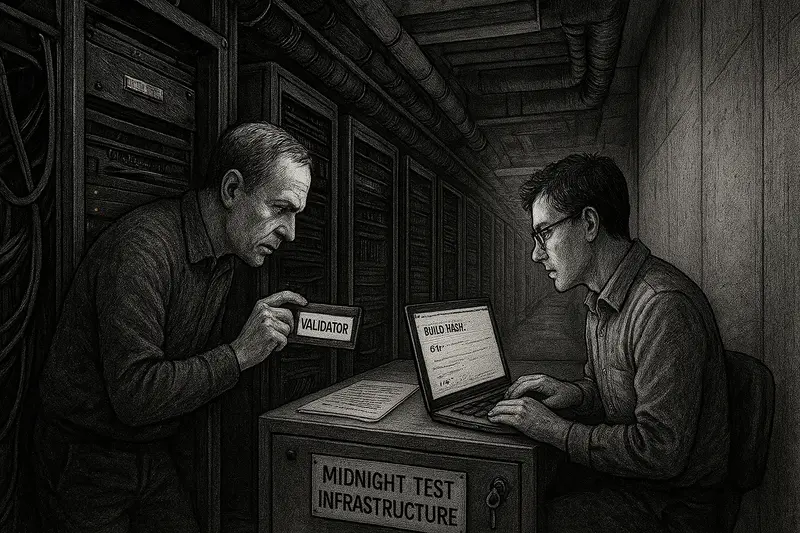
Midnight centralization claims require evidence, not viral certainty
An evidence-based review of allegations against Charles Hoskinson’s Midnight project examines its early validator structure, administrator powers, NIGHT token distribution, Cardano integration, open-source claims and application restrictions. The analysis distinguishes documented launch characteristics from assertions that require further proof, including claims about secret closed-source validator software, fund seizure risks and centralized network control. It also considers how temporary permissions, treasury allocations, emergency keys and staged decentralization should be disclosed to users, developers and investors. Until Midnight publishes clearer control maps, production build information, token lockups and governance procedures, the network should be viewed as an early-stage privacy protocol carrying notable centralization, transparency and execution risks.
Midnight ·
Midnight
Midnight Reframes Privacy as a Defense Against Precision Phishing
Midnight argues that shielding wallet activity can reduce the intelligence attackers use to build precision crypto phishing campaigns, while raising questions about recovery, compliance and trust.
Midnight ·