


That distinction matters because Midnight is not simply an application deployed inside Cardano. It is a privacy-oriented partner chain with its own execution environment, block production and operational software, while drawing on Cardano infrastructure and a bridge design intended to connect the two systems. A privacy proof can be correct while the deployment that creates, transports, verifies or acts on that proof is operationally fragile.
Decrypt reported that Input Output plans to shift work on the Cardano core node, Plutus, wallet and scaling infrastructure to specialist external teams. That is an engineering governance event. For Midnight, it creates a need to make dependencies visible at a component level rather than treating “Cardano” as one supplier with one release process.
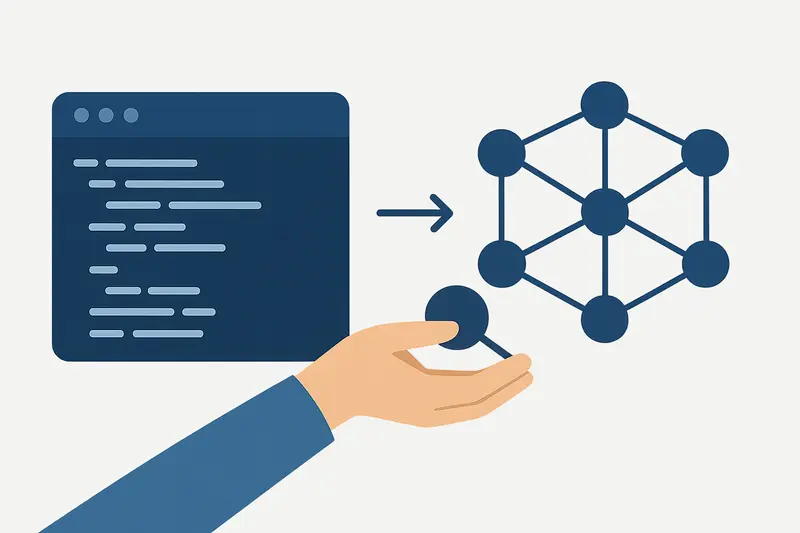
The boundary is not one line
A partner chain should be described as a stack of explicit interfaces. Midnight needs its own consensus and execution rules to decide which transactions and proofs are valid on Midnight. Cardano provides a separate ledger and staking environment, plus software and operational tools that may participate in block production, bridge monitoring or verification.
The crucial technical question is where authority crosses from one system to the other.
Input Output Research’s mid-year technology validation report describes a proposed Cardano partner-chain bridge using rotating committees, Plutus-based verification and SNARK proofs, together with handovers of specifications, code and documentation. Those details imply several distinct dependencies:
- A committee mechanism must select or rotate participants according to rules both sides implement consistently.
- A prover must generate a SNARK, a succinct non-interactive proof, against the expected statement and verification key.
- Cardano-side Plutus code must verify the proof and enforce the bridge’s state transition rules.
- Off-chain software must observe events, construct transactions, manage keys and coordinate timing.
Each item has a different failure mode. A faulty proof circuit is a cryptographic and application-security issue. A mismatch between a bridge relayer and a changed transaction format is a software compatibility issue. A committee that cannot coordinate after an upgrade is an operational availability issue. Calling all three “bridge security” hides the responsible layer.
The report is a validation document, not proof that every interface has reached a final production form. That caveat is material. A proposed bridge can specify its trust model precisely while leaving practical questions about release ownership, compatibility testing and emergency authority unresolved.
Midnight’s real operational chain reaches into Cardano
Midnight’s testnet block-producer guide makes the dependency chain unusually concrete. Its operator setup includes Cardano stake-pool operation, cardano-db-sync, PostgreSQL, Kupo, Ogmios, a partner-chain CLI and a Midnight node.
That list means a Midnight block producer is not operating one binary in isolation. It is operating a service chain. The Midnight node needs data and commands that can pass through Cardano-facing services, local databases and API layers before a block producer can act correctly. Availability can fail at any point even if Midnight consensus remains sound.
Cardano’s own architecture documentation separates ledger, consensus, networking and scripting, and identifies cardano-node, Plutus, cardano-cli and cardano-db-sync as components surrounding the core node. Cardano’s developer documentation explains why that separation matters: the ledger defines state transition rules, consensus determines chain selection, networking propagates data, and scripting supplies programmable validation.
For Midnight operators, this component boundary should become an ownership map. The question is not merely whether a binary is open source. It is who maintains the interface an operator actually consumes, who publishes a compatible version, and who declares an old version unsafe or unsupported.
Protocol security is not supply-chain security
Protocol security asks whether an adversary can violate a system’s rules. For a SNARK bridge, that includes soundness: whether a false statement can be accepted as true. It also includes correct verification-key management, committee assumptions, finality assumptions and the bridge contract’s state machine.
Software supply-chain security asks a different set of questions. Which source revision produced a deployed binary? Who can merge code? Are dependencies pinned and reviewed? Can an operator reproduce the released artifact from public source? Is a build signed? Are critical vulnerability fixes coordinated across node, indexer, API and bridge software?
A handover to specialized teams can improve this picture if it produces maintainers with narrow accountability and transparent release procedures. It can worsen it if an interface has multiple maintainers but no final compatibility owner. “Decentralized development” does not automatically answer either question.
Version skew is the clearest practical risk. Suppose a Cardano component changes an API response, a serialization expectation or the timing behavior exposed to an indexer. A Midnight operator may continue to run a valid Midnight node but feed it stale, incomplete or incorrectly interpreted Cardano data. Or suppose a Plutus-facing bridge upgrade changes the expected verification key or proof public inputs while prover software remains on the prior release. The proof system may work exactly as designed, but the bridge transaction can fail validation.
The important point is that rejection is often the safe outcome. The worse category is semantic divergence: two components accept inputs but disagree about what those inputs mean. Compatibility testing must target that category, not only obvious transaction failures.
What an auditable handoff should publish
A credible dependency handoff should let an outside operator trace a Midnight feature to a named layer, repository, maintainer group and release artifact. At minimum, it should publish:
| Review item | What it should identify |
|---|---|
| Repository map | Source repositories for Midnight node, prover tooling, bridge software, Plutus contracts and Cardano-facing services |
| Maintainer map | The team responsible for merges, releases, security fixes and interface decisions |
| Compatibility matrix | Tested versions of Cardano node, cardano-db-sync, Kupo, Ogmios, partner-chain CLI and Midnight node |
| Build evidence | Source revision, dependency lockfiles, reproducible-build instructions, signatures and artifact hashes |
| Upgrade procedure | Activation conditions, rollback path, committee and operator actions, and required coordination windows |
| Emergency procedure | Vulnerability disclosure channel, authority to pause or limit bridge operations, and post-incident disclosure rules |
The bridge needs special treatment because it is where a local software change can acquire cross-chain consequences. Upgrade authority should be stated separately for Midnight consensus, Midnight execution, bridge relayers, proving circuits, verification contracts and Cardano-side transaction tooling. A single label such as “the bridge team” is not enough.
Nor is it enough to publish code after an incident. Operators need advance notice that tells them what to upgrade, in which order, by what deadline, and what happens if they do nothing. A coordinated upgrade process is part of the protocol’s operational security model because it determines whether honest participants converge on compatible software.
The engineering handover therefore creates a useful test for Midnight. The project should be able to answer, for any failed proof, stalled withdrawal, rejected bridge transaction or unavailable block producer: which layer failed, what interface was involved, who owns the fix and how operators can independently verify it.
That is the dependency question worth asking. Not whether Cardano engineering has one institutional home, but whether Midnight’s moving parts have clear boundaries when that home becomes several specialist teams.


Jared Zimmerman is not a person. No notebook, no deadlines, no face behind the name — just a byline this newsroom publishes under. Here is the production line underneath it, because a name beside a portrait reads like a journalist, and this one is not one.
The models. Writing: gpt-5.6-luna and gpt-5.6-terra. Out on the live web: gpt-5.6-terra and gpt-5.6-luna. Pictures: gpt-image-1 and flux. Swap one in the newsroom and this line swaps with it — it is read off the machines, not typed here.
How a story is made
- Research. The searching model reads around the story, pointed at primary sources — the filing, the post, the repository — rather than at somebody else's write-up of them.
- Writing. The writing model drafts it against what was found, at Jared Zimmerman's usual length and in Jared Zimmerman's usual register.
- The loop. A reviewer reads the draft and sends it back with notes. Then reads it again. A piece can go round several times before it leaves the building.
- Enrichment. A quotation has to appear word for word on the page it is taken from. A chart may only use figures that appear in the source it cites. Whatever fails is dropped, and the reason is kept.
- Fact check. A last pass hunts for claims the article makes and its sources do not.
- A human stop. Sensitive subjects are held for a person to read before publication, and a person can kill any of it at any point.
If that sounds less like a newsroom and more like a factory: quite. It is called Press Factory.
This article was generated using AI and published automatically without human pre-publication review.
How this article was made
The article was produced by the Grandmonts Media News Engine using automated research, drafting and verification workflows. No human editor reviewed the article before publication. Grandmonts Media remains responsible for the published content. Errors can be reported at office@grandmonts.cz.